
Or – Thanks for the mammaries.
Ah …The breast. So many varieties. They are everywhere these days. Turn on the computer and up pops an ad. Breasts. Turn on the television and the characters are active. Breasts. Breasts in magazines, advertisements, everywhere.
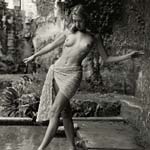
Breasts have a history of their own. Yes, they rate their own history.
During the ancient history of women, the breasts are displayed to their finest, in empire styles, toga wraps, and bodices that hinted or presented the bust line in all its glory. Gowns accentuated the female form, for the most part. Displaying the breast wasn’t taboo and often, servants and women bound for the games went without covering. Much of the art from our ancient past depicts the breast as a thing of both beauty and functionality.
As Christianity swept the lands, the idea of modesty became part of religious behavior. Women in different areas hid breasts, legs and form, although style always allowed the most chic yet desirable bodices. The painting which portrays Mary breastfeeding the infant Jesus, with her Divine breasts, brought about the power / erotic responses from men. They felt the power of fathering so that the breasts would fill with milk, combined with the erotic nature of breasts and nipples as an extension of sensuality.
“The man is happy who can fill you with milk, and who can transform the virgin breasts into a beautiful and perfect woman.” In a poem written by Clemant Merot in the 16th century.
The combination of erotic with power gave breasts an advantage that the phallus had with the much earlier religious rites involving penis worship. Breasts became what men lusted after, envied and fought for. Courtly love proclaimed a woman’s breasts part of what set her in high ideal. The ability to suckle children took on a renewed importance.
In the Renaissance period, breasts took on a shape matching the abundance of the time. Women of size were thought to be the most desirable. Bountiful flesh and large bosoms abound in art of the era.
Moving into the Victorian era, breasts took a dive. Straight into high-neck bodices and full women’s garments. They were jammed into corsets, wrapped until reduced and otherwise stuffed away, out of sight. Modesty, Christian behavior and the dictates of the current monarchy put breasts away for quite a while. Granted the age also gave us some of the most interesting boudoir erotica and hayloft sensuality in writing, but overall it was a very modest period.
The mid-twentieth century saw the breast unbound again, with thinning straps for dresses and pin up images with short shorts and scant tops. Once Twiggy burst on the scene, the rush to small breasts and skinny bodies began. Lack of womanly form and breast binding became popular and women of any curves or large bosoms sat in the background wishing for miracles. Once the century moved toward its close, breasts of all shapes and sizes became popular and women of all forms had styles which accentuated their particular shape. Breasts grew more prevalent in media and the public eye.
In the last decade, we’ve seen the move to naturalize breasts once again. The heavy push of breast-feeding advocates and naturists got attention. So much attention, that the province of Ontario passed the first bill in North America to allow women the freedom to go topless.
The breast has come a long way, after its repetitious journey in and out of the limelight. Dependent on religion, politics and public moral standards of each age, breasts have both shone and been hidden from site. Today the breast emerges, proud to be both the functional milk machine for infants and a sensual part of a woman’s body.
Copyright – J. Thompson
 Sex Scrolls